
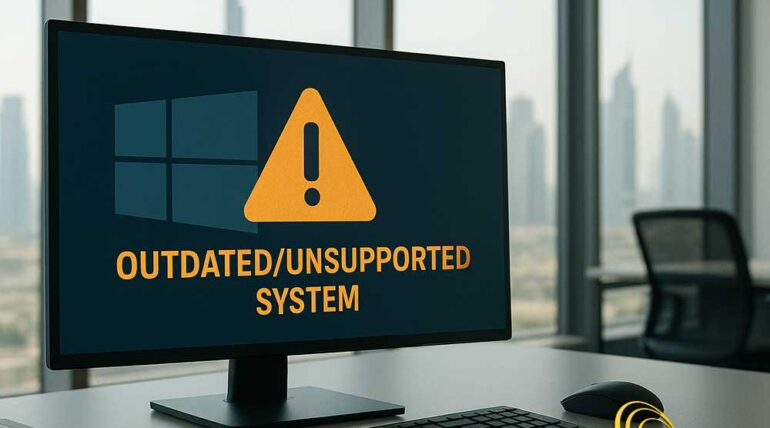
When Microsoft announced that Windows 10 support will officially end on October 14, 2025, many businesses in the UAE made a mental note to “deal with it later.” After all, upgrading systems can feel like an expensive and time-consuming project… one that’s easy to push down the to-do list.
But postponing this decision comes with hidden risks that can cost far more than the upgrade itself. Let’s break down why holding on to Windows 10 beyond the support deadline is a gamble that UAE companies can’t afford to take.
1. Security Risks That Put Your Business in Danger
The biggest consequence of staying on Windows 10 after October 2025 is the lack of security updates. Microsoft will no longer release patches for newly discovered vulnerabilities.
That means:
- Hackers will actively target Windows 10 systems knowing they’re unprotected.
- Sensitive business and customer data could be compromised.
- Compliance with local and international data protection standards may be at risk.
Today, a single cyber incident can damage your company’s reputation, cause financial losses and disrupt operations for weeks.
2. Compliance Issues and Legal Exposure
For many industries in the UAE, from finance, healthcare and hospitality, compliance requirements are strict. Using unsupported software can make it difficult, if not impossible, to meet cybersecurity and data protection obligations.
This can expose businesses to:
- Penalties and fines from regulators.
- Loss of contracts with clients who demand compliance.
- Increased scrutiny during audits.
Simply put: outdated IT isn’t just a technical problem, it’s a legal and financial one too.
3. Higher Support and Maintenance Costs
It might seem like sticking with Windows 10 saves money, but in reality, the costs add up quickly:
- Vendors and software providers will phase out support for Windows 10.
- Custom fixes or workarounds become more expensive.
- IT teams waste valuable time maintaining outdated systems.
This “hidden cost” is often far greater than the price of upgrading, especially when factoring in lost productivity.

4. Productivity Bottlenecks for Employees
Your employees rely on fast, reliable systems to do their jobs. Running outdated operating systems can slow down performance and block access to newer applications designed for modern environments.Some risks include:
For businesses in fast-moving markets like the UAE, these productivity losses can directly impact competitiveness.5. The Upgrade Isn’t Just About Windows 11While Windows 11 is the natural upgrade path, the end of Windows 10 support is also an opportunity to rethink your IT strategy. Businesses can explore:
In other words, this is not just about avoiding risk, it’s about future-proofing your business.Final Thoughts: Don’t Wait Until It’s Too LateEvery business owner and manager knows the cost of downtime, reputational damage, or security breaches. The end of Windows 10 support is a predictable milestone; one that gives UAE businesses the chance to act before it’s too late.At IT-Serve.com, we specialize in helping companies transition smoothly, ensuring minimal disruption and maximum benefit. From planning and migration to long-term IT strategy, we act as your trusted partner.Don’t wait until October 14th catches you off guard. Contact us today through the below form to discuss the best upgrade path for your business.